Pretty in Print: Newspaper Accounts of Ted Bundy’s First Year in Utah

by APRIL ANTHONY CRITCHFIELD

The night of October 18, 1974, started out like any other: a young woman from Midvale, Utah, was meeting up with some friends for pizza. Her night, however, would end up far different than what she expected. No one but she and her attacker would ultimately know what happened, and her lifeless body, stashed in nearby Summit Park, would not be found for days to come.

“Girl Missing From Midvale” was the first of many articles that started a media frenzy concerning stories of several young women and their unexplained disappearances. The headline from The Herald, October 21, 1974, was simple. The article described the missing young woman’s clothes, hair color and when she was last seen. Hope was still in the air that she might be found alive.

Days later, more articles started to flood the local Utah newspapers, including The Herald, in Provo, the Ogden Standard-Examiner, and The Salt Lake Tribune. The newspapers had one thing in common: they wanted to find out what was happening to these young women, and who was responsible. Headlines ranged from “Police Press Search for Girl, 17,” which appeared in The Salt Lake Tribune on October 22, 1974, to “Hunt Goes On, Slayer of Girls Eludes Identification, Arrest,” which was published in the Tribune on December 8, 1974.

Panic was spreading across the state as The Salt Lake Tribune reported on October 28, 1974, that the first missing young woman had been found dead. “She had been shot in the back of the head. A stocking was knotted around her neck,” noted the article. Police didn’t know how someone could have done something so heinous, so inhumane.

A few weeks later, on November 12, 1974, the Ogden Standard-Examiner printed a story about a young woman — who remained anonymous in the newspapers — who had survived an attempted kidnapping at Fashion Place Mall, in Murray, Utah. The article also notified the public of yet another young woman who was now missing from Bountiful. The anonymous victim’s vivid account of what happened to her that fateful night at the mall would ultimately be the key to linking one man, Ted Bundy, to these heinous crimes.
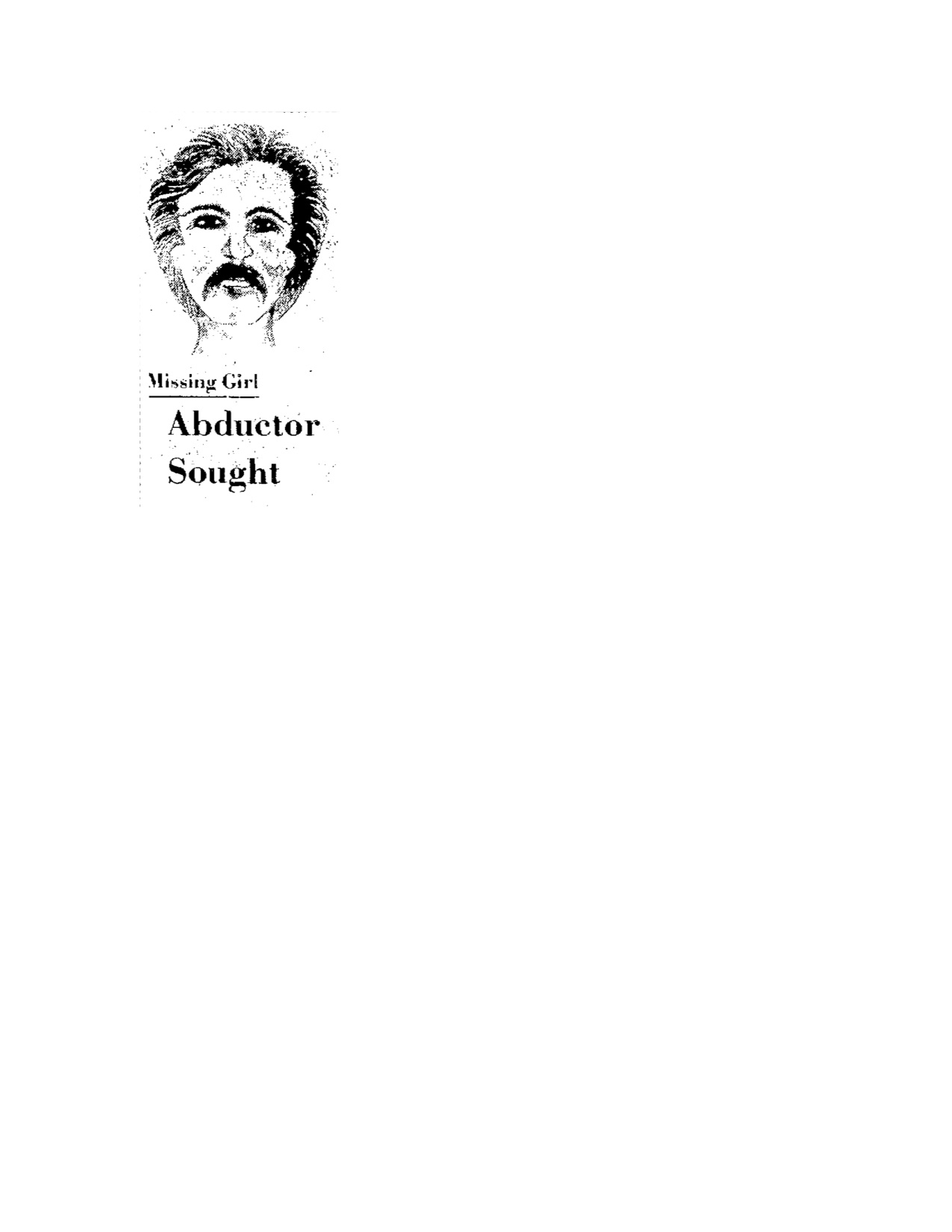
"Sketch composite of Bundy." The Salt Lake Tribune, November 14, 1974.

Although Bundy was finally arrested for kidnapping numerous women, and later murdering them, initially the Salt Lake City police were having a hard time linking Bundy to the reported crimes. “We are attempting to determine if there is similarity in all the acts or if they have been committed independently,” said Salt Lake County Sherriff’s Captain Pete Hayward in the Standard-Examiner. There were no witnesses, Bundy had no accomplices, and except for the anonymous young woman who managed to escape, his victims never got away. The woman’s description of Bundy’s car, his clothes and a sketch composite she provided were the only real pieces of information authorities had to go on.

The woman’s sketch of “Abductor Sought” finally appeared in The Salt Lake Tribune on November 14, 1974. It was the first paper in Utah to publish a sketch of the attacker. Police Captain Hayward said, “We’re back to beating the bushes,” as a result of having to release a 21-year-old suspect for lack of evidence.

From October to December 1974, the newspapers printed continuous information about at least three missing women — some of whom were never found, some of whom were later found dead — and the lack of leads in the cases. It wasn’t until one year later, in October 1975, when the Ogden Standard-Examiner published a headline, “Utah Student Seized in Attempted Murder, Kidnaping [sic],” that Ted Bundy’s name would be associated with the crimes. Once the public found out the suspect’s name, and that he was a University of Utah law student, the associative descriptive identity seemed to be inserted into every headline reporting on this unfolding story.

Also, that same month, the anonymous woman was finally publicly identified as Carol DaRonch. When The Salt Lake Tribune published a headline, “U. Law Student Charged in Kidnaping [sic],” the public finally had a name to attach to DaRonch’s assailant: Ted Bundy. DaRonch’s account paid off, and Bundy was arrested, not for the previous missing women, or their murders, but for the attempted kidnapping of DaRonch.

The Standard-Examiner article reported that Bundy had been charged with the murders of two 17-year-old young women, and the disappearance of a third in Northern Utah. The Chief Deputy for Criminal Prosecution, William R. Hyde, claimed at one point the Salt Lake City Sherriff’s office was dealing with a different serial killer at the time, and some thought that Bundy could also be “The Zodiac Killer.” Hyde refused to comment on too many details and also “clamped a news blackout on local investigators.” Gerald Kinghorn, a Salt Lake County deputy attorney, said Hyde was “fearful of creating too much pre-trial publicity.”

The Salt Lake Tribune published on October 3, 1975, “U. Law Student Charged In Kidnaping [sic].” The story began, “A University of Utah law student was charged Thursday,” which stimulated ideas that Bundy was smart and well educated. The article provided additional background information and reported that Bundy was a second-year law student who “had served as a campaign assistant for the Republican chief executive.” In addition, Bundy “was assistant director of the Seattle Crime Prevention Commission in 1973, and received publicity when he reportedly captured a purse snatcher.” The article included the first photograph of Bundy, dressed in a suit and tie, and clean-shaven.

Serial killers have long been associated with being smart, sly, cunning, and persuasive. Ted Bundy had more than just a bachelor’s degree in psychology (The Salt Lake Tribune, October 3, 1975); he had the newspapers rallying behind him supporting that thesis. By reporting his status in education and his community efforts, the media inadvertently drew attention away from the fact that he was the lead suspect in an attempted kidnapping and aggravated murder charge.
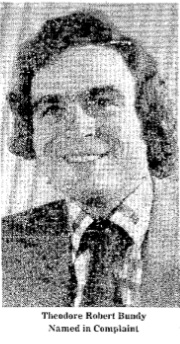
"U. Law Student Charged in Kidnaping," The Salt Lake Tribune, October 3, 1975.

Bundy released his own statement to the newspapers, which appeared in The Salt Lake Tribune on October 5, 1975, under the headline “Friends ‘stand by’ him, Kidnap suspect claims.” Bundy states, “My friends have been a source of great support … this is something that makes you feel that you’ve accomplished something in life.” By allowing Bundy to reach out to his supporters, it was as if the newspapers were allowing him to tell his side of the story. The Ogden Standard-Examiner also reported news from Bundy’s parents. The October 12, 1975, article headlined, “Utah Suspect Once Checked in 6 Deaths,” described their disbelief that their son could do something so terrible. His mother recalled, “Our daughter (19) was going out that night and Ted said, ‘Mom, I hope you know where she’s going and who she’s with.’” Including the recollections of Bundy’s parents helped support the notion that he was too clean-cut of a guy to do this type of crime. He was definitely prettier in print. The article also included his studies at the University of Washington and his “decision to study in Utah and become a Mormon.”

By November 27, 1975, one year after the first crime, the police were still trying to link Bundy to the previous crimes. At that time, he was only arrested for attempted kidnapping. The Ogden Standard-Examiner reported: “Law Student Bound Over in Kidnaping[sic]; 2nd Charge Erased.” According to the judge, “There is no reason to believe that another crime occurred.” Still, Bundy was only accused of kidnapping, and the attempted murder charge had been dropped. The judge went on to reprimand reporters for causing speculation and trying to link Bundy to the previous murders. Later in the article, once again, Bundy’s accomplishments are listed: “The suspect is a second year law student at the University of Utah and a former campaign aide to Washington Gov. Daniel Evans.”

The media created a sensation following a man who many believed could not have committed such a crime. By November 1975, Bundy was not known as a serial killer, nor had he been officially linked to the murders of several young women in Washington, Colorado, and Utah. Bundy was not convicted of kidnapping DaRonch until March 1976. At the time, he was also on trial for the murder of a Colorado woman, Caryn Campbell. In June 1976, Bundy was sentenced to one to fifteen years in prison for aggravated kidnapping and one year later, he escaped. He was found a few days later and returned to prison. In December 1977, he escaped again and fled to Florida. Bundy was finally found and arrested in Florida while driving a stolen vehicle.

In 1989, Bundy received the death sentence. According to Ann Rule, “Two days before his death, Bundy admitted to killing a score of other women and girls in Washington, Colorado, Utah, Oregon, and Florida.” (Rule, cited by Saltzman, 1995) Bundy was executed by electric chair at dawn on January 24, 1989, at Raiford Prison in Starke, Florida.

April Anthony Critchfield is a senior at the University of Utah. She graduated in August 2012 with a Bachelor of Science degree in speech communication.

Sources

Bundy Tests Utahn On Kidnap Details,” The Salt Lake Tribune, November 17, 1977.

“Utah Woman Positive: Bundy Was Kidnaper,” The Herald, November 17, 1977.

“Bundy’s Attorney Requests Disclosure of Evidence,” The Salt Lake Tribune, December 23, 1975.

“Defense Asks ID Pictures,” The Herald, December 23, 1975.

Peter Gillins, “Law Student Bound Over Kidnaping; 2nd Charge Erased,” Standard-Examiner,” November, 27, 1975.

Ken Connaughton, “Ruling Wednesday – Bundy Receives Closed Hearing,” The Herald, November 25, 1975.

“Blood Sample Ordered In Law Student Case,” The Herald, October 16, 1975.

“Suspect Thanks Seattle Friends,” The Herald, October 13, 1975.

“Utah Suspect Once Checked in 6 Deaths,” Standard-Examiner, October 12, 1975.

“Parents Defend Son in S.L. Jail,” The Salt Lake Tribune, October 10, 1975.

“Bundy Arrest Sequence,” The Herald, October 6, 1975.

“Kidnap, Slay Try Suspect Stayes [sic] in Jail Without Bail,” The Herald, October 5, 1975.

Clark Lobb, “Friends ‘Stand By’ Him, Kidnap Suspect Claims,” The Salt Lake Tribune, October 5, 1975.

Peter Gillins, “Utah Student Seized in Attempted Murder, Kidnaping,” Standard-Examiner, October 3, 1975.

Clark Lobb & Tom McCarthey, “U. Law Student Charged in Kidnaping,” The Salt Lake Tribune, October 3, 1975.

“Girl Slayings,” The Herald, December 25, 1974.

Clark Lobb, “Hunt Goes On, Slayer of Girls Eludes Identification, Arrest,” The Salt Lake Tribune, December 8, 1974.

“Police Chase Leads In Kidnap-Murders,” The Salt Lake Tribune, December 5, 1974.

“For Slayer of Midvale Girl Secret Witness Posts Reward,” The Salt Lake Tribune, November 19, 1974.

“Police Artists’ conception of a suspect,” The Herald, November 17, 1974.

“Missing Girl Abductor Sought,” The Salt Lake Tribune, November 14, 1974.

“Police Try to Link Kidnapings,” Standard-Examiner, November 12, 1974.

“Intermountain Area Obituaries – Melissa Smith,” The Salt Lake Tribune, October 29, 1974.

“Chief’s Daughter Found Dead,” The Salt Lake Tribune, October 28, 1974.

“Police Press Search for Girl, 17,” The Salt Lake Tribune, October 22, 1974.

“Girl Missing From Midvale,” The Herald, October 21, 1974.

Associated Press, “Ted Bundy Timeline,” Deseret News, February 13, 1999.

Rachelle H. Saltzman, “‘This Buzz Is For You’: Popular Responses To the Ted Bundy Execution,” Journal Of Folklore Research 32, no. 2 (1995): 101-119.

1942: Developing the Topaz Community As Noted in The Topaz Times

by JESSICA BOUDAH

On September 11, 1942, the Central Utah Relocation Center – later known as Topaz for most of the Second World War – opened. The U.S. War Relocation Authority (WRA) imprisoned roughly 9,000 Japanese-American residents from the San Francisco Bay Area. Topaz, one of ten WRA incarceration camps, housed virtually all Japanese-Americans from the Bay Area by the end of the year. (Bankson)

Japanese-Americans from the San Francisco area, who had been held at Tanforan Race Track while Topaz was under construction, were transported to Delta, Utah, by train. (Beckwith) Upon the internees’ arrival at Topaz, many barracks and schools were not complete at the camp. (Beckwith) Beckwith also mentioned in her article that once situated, some internees “finished building their own barracks and other structures at the site.”

The Topaz Times, which was published at the Central Utah Relocation Center, was first published at Tanforan Assembly Center and then continued in Topaz until the camp closed in October 1945. The first issue printed in Topaz was printed on September 17, 1942. The Times was designed to inform its public on local events, community involvement, employment, education and religion.

In issue No. 1, The Topaz Times stated, “You will find various agencies of the United States Government have been mindful both of your needs and those opportunities which you desire in the fields of religion, employment, education, health and recreation.” The same article also states that the authorities of the center expected its internees to put in their best efforts in the “common objective” of developing the Topaz community to the “greatest degree possible.”

Most issues of The Topaz Times ranged from four to six pages in length. The first ten issues of the Times were called pre-issues. These pre-issues were published from September 26 to October 24, 1942. Within the first month of the camp’s opening, there was a great deal of internal action and organization necessary. As illustrated in eight of the first ten issues of The Topaz Times, there was a large amount of change in the society’s organization. In pre-issues No. 1 through 7, the main topics discussed were residential housing, education facilities and employment for internees.

With approximately 8,500 Japanese-American internees, it was deemed necessary to have immediate action on the internal organization. (Ostlund) Framework for a community council, as stated in the WRA Manual, was debated in a community meeting that was called in late September. According to an article in the pre-issue  published September 26, 1942, blocks 3, 5, 6, and 14 were to elect councilmen the following Monday. The article reported, “The vision of establishing Topaz into a model city came another step nearer to its realization as the machinery for self-government was being rapidly set up this weekend through the cooperation of the residents and the project administration.”

Association between the new community and its need for organization was an important theme in the first three pre-issues of the paper. Pre-issue No. 1 also stated that the Community Council would consist of one representative from each residential block, and later stated the members of the community council would possess some jurisdiction in the Topaz community:

“The Community Council will be authorized to ‘establish such regular and special committees and commissions as may be necessary to carry out its duties and functions or to cooperate with the Project Director in promoting the general welfare of the residents,’ according to a statement approved by Project Director Charles Ernst.” (The Topaz Times, September 26, 1942, 1)

According to an article by Clarence Ostlund, some earlier issues that faced the Community Council were: enacting a charter or constitution under which community-business could be legally transacted, labor problems, welfare and health problems, housing problems and fuel, education and recreation, work clothing problems, medical problems due to “lack of doctors,” medical supplies, equipment and hospital facilities. (Ostlund, Section I)

The issue of The Topaz Times published October 3, discussed the first eight members inducted into the Community Council in early October 1942. The new members of the Topaz Community Council were: Vernon Ichisaka (Block #3), Albert Kosakura (Block #5), Ernest Iivena (Block #6), Kay Nishida (Block #7), Dr. Carl Hirota (Block #12), Sam Yagyu (Block #13), Shinji Yamemoto (Block #14), and Paul Fuiii (Block #15). The same issue also described how the new officers repeated the following oath:

I solemnly pledge, as a member of the Community Council of Topaz, State of Utah, to uphold the Constitution of the United States and the related laws thereof. I further pledge my ideals, devotions and energy to the common welfare of all residents of this community: and to insure that my efforts will not be contrary to the basic principles of human rights.

Outlined in the October issue of the Times were the basic roles of the Topaz Community Council, which included: members were obligated to act in a legislative capacity, act in a liaison capacity, and to act in an advisory capacity.

In its first eight pre-issues, The Topaz Times also covered education – an important issue for the United States Government and the Japanese-American internees. Author Charles Wollenberg writes in the book, Schools Behind Barbed Wire, that “during WWII the United States government undertook an unusual educational enterprise – teaching students who were imprisoned behind barbed wire … an understanding of the American ideals, institutions and practices.” (210) The WRA soon found itself capable and “responsible for the education of more than 25,000 Japanese-American children,” not just at Topaz, but at other relocation centers as well. (75)

Pre-issue No. 6, published on October 10, 1942, is the first issue where we see education reach the front page of the paper. The paper reported that Robert E. Gibson, the Assistant Director of Education, would be visiting the city to assist with the “evolution of the educational curriculum” at Topaz. The issue suggested that Gibson believed that the “prevailing educational system in the average American community need[ed] reconstruction and that the WRA projects [had] the opportunity to set an example for America” in the Topaz community.

In the next issue, published on October 14, the headline read, “Housing For Schools Discussed Before First Public Hearing.” Educational systems were underway. When internees first started moving into the Topaz community, school buildings were not yet completed. The issue of the Times stated that at the public hearing, the need for an elementary and high school was deemed necessary. The same issue also discussed idyllic segmentation of the camp, and which block would be designated to which school building. The issue reports a motion by a Community Council member, Marii Kyoroku of the housing committee, who displayed a series of graphs that showed a breakdown of building space for the high school and elementary school. As written in pre-issue No. 7, “all of Block 32 be allocated to the high school” with 28 schoolrooms … and “half of Block S and half of Block 41 to the elementary school.”

The Topaz Times is extremely important to our present-day understanding and knowledge of the Relocation Center at Topaz. Now, we as researchers have the ability to understand what life was like at Topaz in 1942 through the articles and topics discussed in The Topaz Times. The development of community involvement became more prevalent within the Topaz society, as seen in the progression of the first eight issues of The Topaz Times. By 1943 camp life at Topaz “settled down” as residents got in the habit of gardening, attending classes at schools or recreation halls and working, according to an article from the Topaz Museum Web site. The Topaz Times helped develop the community life within the camp. By promoting community involvement with elections for the Community Council, and developing space for both an elementary school and a high school, The Topaz Times reassured the internees that Topaz was a “model city” and it would be developed into the greatest city possible – as stated in the first issue of The Topaz Times: Jewel of the Desert.

Jessica Boudah is a senior at the University of Utah, planning to graduate at the end of fall semester 2010. She is a mass communication major in the strategic communication sequence. Jess is originally from Burlington, Vermont, a small, idyllic town, also home to the University of Vermont. Currently, Jess works for the Salt Lake City School District as a tutor at Highland High School. She plans to acquire her master’s degree in education after receiving her bachelor’s degree in communication from The University of Utah.

Sources

Bankson, Russell A. “Guide to the Records of the United States War Relocation Authority Central Utah Project 1941-1945.” University of Washington Library.

Jane Beckwith. “Topaz Relocation Center.” Utah History Encyclopedia.

Clarence Ostlund, ed. “War Relocation Authority Central Utah Project Topaz, Utah.” Online Archive of California. The Bancroft Library, University of California, Berkeley.

“Greetings,” The Topaz Times, September 17, 1942, 1.

“Blocks 3, 5, 6, 14 to Elect Councilmen Next Monday,” The Topaz Times, September 26, 1942, 1.

“The City,” The Topaz Times, September 26, 1942, 1.

“More on Elections,” The Topaz Times, September 26, 1942, 3.

“Induction of 7 Councilmen Slated for 7:30 Tonight,” The Topaz Times, September 30, 1942,1.

“More on Community Council,” The Topaz Times, September 30, 1942, 5.

“Eight Representatives Take Council Oath Wednesday,” The Topaz Times, October 3, 1942, 1.

“More on Induction,” The Topaz Times, October 3, 1942, 2.

“Education,” The Topaz Times, October 10, 1942, 1.

“Housing for Schools Discussed Before First Public Hearing,” The Topaz Times, October 14, 1942, 1.

“Education,” The Topaz Times, October 14, 1942, 2.

Charles Wollenberg. “Schools Behind Barbed Wire.” California Historical Quarterly 55 (1976): 210-217.


Fortunato Anselmo

by LAURA NIELSON NEWBOLD

From 1890 to the 1920s, Utah became home to thousands of Italian immigrants. This second wave of Italian immigrants exerted by far the most influence on the development of Utah, and the development of Italian culture in Utah. Unlike the first wave of Italian immigrants, in the late 19th century, this second wave included immigrants from all parts of Italy, most notably Calabria and Sicily and the northern regions of Trentino and Piedmont. As a result of this increase of Italian Americans, a Little Italy soon developed and spread across the western part of Salt Lake City near the Rio Grande railroad station. Due to the influence of a devout Catholic following, a parish began holding meetings at St. Patrick church in downtown Salt Lake City. (Notarianni) It was this enviroment in which Fortunato Anselmo, one of Utah’s most famous Italian Americans, raised his family and thrived.

"Italian fighter Primo Carnera (left), visits Italian Vice Consul Fortunato Anselmo at 164 S. 900 East, Salt Lake City, May 1930."

Born October 1, 1883, in Grimaldi, Italy, Fortunato Anselmo immigrated to Pueblo, Colorado, in the early 1900s. There he met and married Anna Pagano, and the couple had three daughters, Gilda, Annette, and Emma. In 1911, Anselmo and his family moved to Salt Lake City and started F. Anselmo & Co., an imported wholesale Italian food store. With the store’s success, he opened another in Carbon County, where many Italian immigrants had settled to work on the nearby railroads and mines. With so much interaction with fellow Italian immigrants, Anselmo started La Gazzetta Italiana in 1912, to give a voice to the concerns and interests of his fellow immigrants. He quickly established himself as a representative of Italian Utahns, particularly those in the Salt Lake Valley. (Notarianni)

In 1915, he was appointed vice consul of Italy of Salt Lake City and the official adviser to Utah and Wyoming Italians. As such, he presided over all the official documents that required the approval of the Italian government, such as requests for visas, passports, and other papers and documents. He also served as a representative of the Bank of Naples, a prestigious institution and one of Italy’s oldest banks. This position allowed him to help local Italians send money orders to friends and relatives in Italy as well as provide the proper paperwork for traveling immigrants. (Notarianni)

Beyond these responsibilities, Anselmo also participated in many of the local political and social issues of the community. One endeavor he is well known for was his lobbying of the Utah State Legislature to have Columbus Day proclaimed a legal state holiday. While his efforts ultimately failed, Columbus Day did eventually become a holiday in 1919. (Notarianni; Chiariglione)

In addition to being a businessman and diplomat, Anselmo was well known for his magnanimity. Despite not being a member of the Church of Jesus Christ of Latter -day Saints, his generosity was spread to some of the most prominent Mormons at the time. In 1943, J. Reuben Clark Jr., a member of the Church’s First Presidency and namesake of Brigham Young University’s Law School, wrote Anselmo a letter thanking him for the cheese he sent him. Clark wrote, “As I am sure you like cheese (you can hardly like it better than I do), and as you know as well as I how hard good cheese is to get just now, I feel very certain that you will understand me when I say I am most thankful to  you for your thoughtfulness in sending to me that large portion of Gorgonzola cheese.” (Clark)

Similarly, the entire First Presidency of the Church wrote Anselmo in 1946 to thank him for the olive oil he gave them. They noted, “We are all beneficiaries of you gracious kindness in the matter of a supply of pure Italian olive oil. It has been so long since we were able to secure any of this oil that it is a real luxury. Please accpet our thanks for this splendid gift and accept also our sincere wishes for your welfare.” (Smith, Clark, and McKay)

One of his sadder diplomatic duties took him to the site of a mining accident. In 1924, Castle Gate suffered a mine explosion in which 172 men were killed, twenty-two of them Italian immigrants. As one of the most well known Italian Utahns at the time, Anselmo traveled to Castle Gate to offer his services and condolences to the devastated town. (“Castle Gate Relief Fund”)

At other points in his career, Anselmo rubbed shoulders with celebrities and dignitaries from around the world. In 1922, Anselmo and his wife entertained Vittorio Rolandi-Ricci, the Italian ambassador to the United States. Governor Mabey, the Utah governor at the time, was so impressed with Anselmo’s hosting abilities that he wrote him a letter saying, “I would indeed be remiss in my duty if I did not convey to you my cordial appreciation for the splendid reception accorded your esteemed countryman, Ambassador Ricci. In every respect the ceremonies and entertainment were commendable, and the committee in charge is to be heartily congratulated.” In 1930, the Anselmo family was treated to a visit by Italian heavyweight boxing champion Primo Carnera, who is depicted in the photograph. Probably the most distinguished guest Anselmo had the opportunity to greet was Cardinal Eugenio Pacelli, who would eventually become Pope Pius XII. (Notarianni; Mabey)

Anselmo’s favor with the Italian government and their diplomats actually began early on in his career as vice consul. On Feburary 3, 1920, after only five years of being vice consul, he was made a Knight of the Crown of Italy and Officer of the Order of the Crown of Italy. These awards, much like being knighted in England, are only given to those believed to have offered great service to the Italian government. Most who are awarded with such an honor are military men or important political figures. The fact that Anselmo was awarded with both honors speaks volumes of about how valued he was as a diplomat. (Notarianni; “Italian Consul Honored By King”)

Despite these honors, Benito Mussolini forced Anselmo to resign from his position as vice consul in 1923 after Anselmo completed the naturalization process and became a United States citizen. However, he was ordered to maintain the position until a successor could be appointed.  Nobody else was ever appointed, and in 1941, the US government ordered the office to close entirely. (Notarianni; Monson)

In addition to forcing him out of his position as vice consul, becoming a naturalized citizen incited distrust in terms of Anselmo’s allegiance to America. Some even went as far as to claim he was un-American and began a movement to denaturalize Anselmo. These rumors and defamations caused many to speak out on behalf of Anselmo and his family. One notable writer, Secretary Gus P. Backman of the Salt Lake City Chamber of Commerce, wrote a letter to Burton W. Musser. Backman writes:

I have been personally acquainted with Mr. Anselmo for fifteen to eighteen years …. During the entire time I have know Mr. Anselmo, he has always conducted himself in a most outstanding manner, has also been rated by me, as well as by the people of the community in general, as a forthright, honorable business man. His business ethics have always been above reproach and any question as to his Americanism and loyalty to American ideals has never to my knowledge been raised …. This letter is written due to the fact that I understand some one has started a movement to denaturalize Mr. Anselmo which, in my opinion, would be outrageous …. (Backman)

Fortunately for Anselmo, the movement to denaturalize him failed. In 1950, the office of vice consul was reopened, and the position was returned to Anselmo. He served in that position until he died on July 15, 1965. (Notarianni) Zopito Valentino, an Italian American author, has since eulogized Anselmo with the following:

For how long have the Italians of Utah known Anselmo? For how long have they looked to him for help, protection and advice? Who ever saw his door closed? Who ever found his heart indifferent? He is always ready to extend the glad hand, to help and protect, to offer his counsel and to give liberally. A more generous heart does not exist and a better soul is not to be found. (Valentino)

Today, visitors can learn about Anselmo Fortunato and his family by visiting his home, located at 164 S. 900 East in Salt Lake City. His house has been preserved as a historical monument by the Utah State Historical Society. Visitors may also visit the Utah State Historical Society for more information about Anselmo and other notable Utahns.

Laura Nielson Newbold is a communication major at The University of Utah. She will be graduated this year with a Bachelor of Arts in speech communication and plans to attend the University of Utah S.J. Quinney Law School in the fall. Her husband, Sean Newbold, translated all of the Italian documents into English.

Sources

Fortunato Anselmo Papers, Folders 1-15, Box 1, 1917-1963, Utah State Historical Society.

Governor Charles R. Mabey to Fortunato Anselmo, May 19, 1922, Fortunato Anselmo Papers, Mss B 103, Utah State Historical Society.

Secretary Gus P. Backman to Burton W. Musser, March 19, 1943, Fortunato Anselmo Papers, Mss B 103, Utah State Historical Society.

Secretary of State E. E. Monson to Fortunato Anselmo, July 12, 1941, Fortunato Anselmo Papers, Mss B 103, Utah State Historical Society.

Salt Lake Tribune article, “Italian Consul Honored By King,” February 3, 1920, Fortunato Anselmo Papers, Mss B 103, Utah State Historical Society.

J. Reuben Clark Jr. to Fortunato Anselmo, March 30, 1943, Fortunato Anselmo Papers, Mss B 103, Utah State Historical Society.

George Albert Smith, J. Reuben Clark, and David O. McKay to Fortunato Anselmo, November 29,1946, Fortunato Anselmo Papers, Mss B 103, Utah State Historical Society.

Prop H. Chiariglione to Fortunato Anselmo, January 6, 1917, Fortunato Anselmo Papers, Mss B 103, Utah State Historical Society.

Philip F. Notarianni, “Italianità in Utah: The Immigrant Experience,” in Helen Z. Papanikolas, ed., The Peoples of Utah. Salt Lake City: Utah Historical Society, 1976.

Zopito Valentino, Italian Activities of the Intermountain Region (1965-1975)

Castle Gate Relief Fund Committee.” Division of Archives and Records Service, Department of Administration Services.

Ordini Cavallereschi del Regno d’Italia, Corpo della Nobiltà Italiana.

Statutes of the Order of Merit of Savoy

The Completion of the Transcontinental Railroad in Promontory, Utah

by KEITH THOMAS

The transcontinental railroad was completed May 10, 1869, in Promontory, Utah, when the Union Pacific Railroad of the East met the Central Pacific Railroad of the West. Many people said that building a single railroad that spanned the United States was impossible, but it was essential to expedite travel, communication, and business. It also helped to cement California’s allegiance to the United States during the Civil War, and win the fight for land with the Native Americans; it was easily one of the greatest of the United States’ achievements during the nineteenth century. (Utley, 45)

In 1850, the U.S. House of Representatives’ Committee on Roads and Canals stated the basic motives for building a railroad to the Pacific Ocean, saying that it would “cement the commercial, social, and political relations of the East and the West,” and would be a “highway over which will pass the commerce of Europe and Asia.” (Utley, 1) At the time, trade from China and Japan to the East Coast of the United States was only possible by ship, but building a railroad to the Pacific meant great trade and business opportunities. The railroad would also help win land from the Native Americans, through quick and easy transport of military supplies, soldiers, and citizens to occupy the West. The new possibilities for more efficient transport of mail and journalists would make communications faster. And the railroad would strengthen political bonds with California, ensuring that the new state would not secede from the Union as the Civil War began. (Utley, 1)

In 1862, Congress passed The Railroad Act of 1862. Under the act, the Union Pacific Railroad was authorized to build a railroad westward until it met with the Central Pacific, which was authorized to build eastward from California. (Kraus, 49) The construction of the railroad was not actually begun until 1865, after the Civil War ended, making more resources available to the project, and the Railroad Act of 1864 was signed, making the government the main endorser of the railroad. (Kraus, 100-107)

On May 10, 1869, the two railroad companies finally came together in Promontory, Utah. Leland Stanford, president of Central Pacific Railroad, and Dr. Thomas Durant, vice-president of the Union Pacific Railroad, pounded in the last two stakes to complete the railroad. (New York Times, May 12, 1869) Telegraph stations all across the country were waiting for the signal that the railroad was complete, and with the single word “done,” the country was informed that the task was completed. (Utley, 45)

A silver sledgehammer and golden spikes were used to complete the project, and on the final spike there was a silver plate with the inscription, “The last tie laid on the completion of the Pacific Railroad, May 10, 1869.” (Derby, 352) After a ceremony and celebration, the golden spikes were taken out and replaced with regular spikes, driven by a standard hammer. (Deseret News, May 18, 1869) At the time, this was considered to be one of the greatest industrial feats ever achieved.

The completion of the railroad meant progress in a lot of areas. According to E.H. Derby, an early traveler of the transcontinental railroad, riding the railroad was a pleasant and comfortable experience for passengers, and a great way to travel across the country in a quick and efficient manner. (Derby, 15; Pine 13-19) Political bonds with California were strengthened as well, leaving trade with Asia to be the only expectation that fell short, which ironically, was the main reason for building the railroad in the first place. The completion of the Suez Canal, however, made the railroad unnecessary for trade. (Utley, 57)

Now, the site where the two railroads met in 1869 is the Golden Spike National Historic Site, and although the section of track at Promontory, Utah, is no longer in commercial use, visitors can see reenactments of the trains coming together on a daily basis, through the use of replicas of the Union Pacific’s No. 119 and the Central Pacific’s Jupiter locomotives.

Keith Thomas is a communication major at The University of Utah. He is planning to graduate with his bachelor’s degree after he completes fall semester 2010, after which he is planning to join the Navy and sail the open seas.

Sources

E.H. Derby. The Overland Route to the Pacific. Boston: Lee & Shepard, 1869.

George W. Pine. Beyond the West. New York: T.J. Griffiths, 1870.

Union Pacific Railroad and Connections 1870. Map.

Robert G. Athearn. Union Pacific Country. Chicago: Rand McNally, 1971.

Andrew J. Russell. East and West Shaking Hands at Laying of Last Rail. 1869. Photograph. National Park Service.

“The Pacific Railroad,” The New York Times, May 12, 1869.

“The Proceedings at Promontory Summit,” The Deseret News, May 19, 1869.

Union Pacific Railroad 1867. Map. N.F. Mraz.

Union Pacific Railroad Collection. Promontory, Utah. 1969. Photograph.

George Kraus. High Road to Promontory. California: American West Publishing, 1969.

Robert M. Utley. Golden Spike. Washington, D.C.: US Government Printing Office, 1969.

The Ogden, Utah, Hi-Fi Murders: April 22, 1974

by KRISTINE CHILD

A heinous crime was committed in the quiet community of Odgen, Utah, on the night of April 22,1974. Little did those at the Hi-Fi store in town know what was going to happen.

Dale Selby Pierre and William Andrews, who were United States Air Force airmen, entered the shop where two employees, Stanley Walker and Michelle Ansley, “a pretty 19-year old who had been hired as a store clerk only a week before,” were working. (Spangler) Pierre and Andrews took them down to the basement, tied them up, and then they started to rob the store. When Cortney Naisbitt came into the store to talk with Stanley Walker, the robbers took him down to the basement also. (DelPorto) Later, Orren Walker came looking for his son, Stanley; Carol Naisbitt went to the store, too. Both were taken to the basement.

Outside, Keith Roberts, another airman, waited for Pierre and Andrews to rob the store. After forcing the hostages to drink liquid Drano, Pierre raped Michelle Ansley. (DelPorto, Lund) Then, deciding that it was taking too long for the hostages to die, Pierre shot each of them in the back of the head. Orren Walker survived, only to be tortured and have a pen kicked into his ear. (Wade) The men then loaded up their van with the stolen equipment and left.

Gary Kinder described the scene in his book, Victim: The Other Side of Murder:

When Stan had not shown up for dinner, Mr. Walker had driven to the shop to see if he had had trouble with the utility jeep they had just bought. Mrs. Walker began to worry when two hours had passed and neither had returned home. A little after ten she and the younger boy had gone to the shop. The boy, a strapping sixteen-year-old, had rung the buzzer in back. When he heard his father yelling for them to call the police and an ambulance, he had reared back and kicked in the locked door. (Kinder, 52)

Stanley Walker and Michelle Ansley were dead when they were found.  Carol Naisbitt made it as far as the ambulance ride, but was pronounced dead on arrival at St. Benedict’s Hospital in Ogden, Utah. Cortney Naisbitt was not expected to survive, but he pulled through with serious and permanent brain damage, and was hospitalized for 266 days. (Delporto) Orren Walker survived as well, but had extensive burns around the mouth and face, along with major ear damage from the torture.

Within hours of the crime an Air Force officer who supervised Pierre, Andrews, and Roberts, called in a tip to the Ogden City Police Department. When two teenage boys found wallets and other personal belongings of the victims in a Dumpster near Hill Air Force Base, a crowd of airmen gathered and after some theatrics and keen detective work, the three men were taken in as suspects.

All three were tried together for first-degree murder and robbery. (Lund)  The Deseret News reported on August 28, 1987: “Because of emotion and tension surrounding the case, it had been moved to Farmington from Ogden in a change of venue. Still within the same judicial district, Ogden Judge John F. Wahlquist heard the case.” (Wade) Walker was able to testify as the star witness. Naisbitt, on the other hand, suffered from amnesia due to his injuries and did not go to the trials, but his father, Dr. Bryon Naisbitt, did testify.

Because Roberts was waiting in the van and was not in the store at the time of the murders, he was only convicted of robbery and sent to prison. He was paroled in 1987.

Pierre and Andrews, on the other hand, were found guilty on both accounts of robbery and murder in the first degree. A journalist covering the trial reported on November 11, 1974: “The decision came from an 11-man, one woman jury after a day-long sentencing hearing in Second District Court.” (Lund)

At the time of the original sentencing the death penalty choices were by hanging or by a firing squad. Gilbert Athay and John Caine, the attorneys for Pierre and Andrews, appealed the verdicts with help from the NAACP and Amnesty International. The NAACP became involved because all three defendants were African American. During the process of selecting jurors, the candidates were intensely questioned in regards to their views on black people and their opinion on blood atonement.

A reporter present during the trial reported, “The undercurrent of emotion erupted one afternoon when juror James Weaver received a napkin at a Bountiful restaurant on which were written the words, ‘Hang the niggers.’ Court bailiff Tom Lenox, an ex-military intelligence officer and a Davis County deputy, reported to [Judge] Wahlquist that only two or three of the other jurors had seen the note, which Weaver had turned immediately over to the bailiff.” The defense pushed for a mistrial at that point, but Wahlquist gave a stern reprimand to the still unknown writer of the note. (Wade)

Amnesty International held a candlelight vigil on the night Pierre was put to death. In the article, “Amnesty plans vigil to protest Aug. 28 execuation of Selby,” the reporter stated, “State coordinator Michael Spurgin said the human rights group opposes the death penalty because it does not deter violent crime and is biased by race and economic class.” (Amnesty) Pam Wade reported, “News reports that day said Selby and Andrews  sat silent and emotionless as the verdicts were read but as Andrews left the courtroom, escorted by guards, he turned briefly, stared and clenched his fists at Orren Walker.” (Wade)

While in prison, Dale S. Pierre legally changed his name to Pierre Dale Selby. (Bernick) Selby was put to death by lethal injection, the first in Utah, on August 28, 1987. Gary DeLund, executive director of the department of corrections, was the man who gave the order to execute Selby. DeLund said, “It was remarkably different than the way his victims died. This execution was very calm, very peaceful. It (lethal injection) is probably the most humanitarian way to end a life.” (Spangler)

Andrews had the chance to appeal again after Selby was put to death. He believed he shouldn’t die, that he was a victim of circumstance, error, and youth. (Bernick) Earl Dorius, the assistant attorney general at the time, described Andrews as “… very slick, almost warmhearted, and sounds somewhat sorry for what he had done. But I’ll tell you, he is very methodical in his answers. It’s clear to me he’s been prepped to go just so far.” (Bernick 4A) William Andrews also was executed by lethal injection, on July 30, 1992.

Kristine Child is a senior at The University of Utah.  She is majoring in mass communication with an emphasis in strategic communication.

Sources

“Amnesty plans vigil to protest Aug. 28 execution of Selby,” The Deseret News, July 15, 1987, 10 A.

Bob Bernick Jr., “Selby’s final footsteps are echoing harbingers of fate awaiting Andrews,” The Deseret News, August 28, 1987, Metro, 4A.

Brett DelPorto, “Daughter’s death is avenged but bitter memories live on,” The Deseret News, August 28, 1987, Metro, 4A.

Brett DelPorto, “Hi Fi survivor aiming to leave ‘fame’ and victim status behind,” The Deseret News, August 28, 1987, Metro, 5A.

Jerry Spangler, “Selby Pays for 1974 Hi Fi Murders: Injections painlessly end life of killer by 1:12 a.m.,” The Deseret News, August 28, 1987, Metro.

Pam Wade, “Web of evidence tightened inexorably in the Hi Fi trial: Grisly event pieced painstakingly slowly,” The Deseret News, August 28, 1987, Metro, 4A.

Wanda Lund, “Hi Fi 2 guilty of murder,” The Deseret News, November 16, 1974, Metro, 3A.

Wanda Lund, “Jury Decrees Death for Hi Fi Slayers,” The Deseret News, November 11, 1974, Metro, B.

Gary Kinder. Victim: The Other Side of Murder. New York: Delacorte Press, 1982.

Woman’s Suffrage in Utah: The Woman’s Exponent Reacts To the Edmunds-Tucker Act of 1887

by JAMIE A. WELCH JARO

After the United States Congress stripped Utah women of their right to vote in 1887 through the Edmunds-Tucker Act, one Utah publication, The Woman’s Exponent, its editors and readers alike, chose to fight back. Through editorial pieces, letters, columns and speeches, it is evident that the people of Utah were united against this outrageous law which denied them their basic freedoms as citizens of the United States.

Utah women were able to vote in political matters as early as the year 1870, granted by territorial legislature. They were the first women in the history of the United States to have this right. Sometime in the year 1847 during the final settlement of the Salt Lake Valley, both men and women voted by ballot. This, Hubert Howe Bancroft records, may have been “the first instance in the United States where woman suffrage was permitted.” (Bancroft, 272)

The Edmunds-Tucker Act was passed in 1887 as an attempt to defeat polygamy in Utah as well as the political power of its Mormon settlers. The law broke down the local political system already well rooted in the Utah Territory, replacing it with federal control. Along with losing their rights to plural marriage and their land, Utah women were outraged at losing their basic right to vote after having it for seventeen years. Women fought this action and were supported by men both within the Mormon Church and outside it.

The Exponent, a Salt Lake City women’s newspaper originally published by Mormon women Emmeline B. Wells and Louisa Greene, was an eight-page monthly publication that covered topics ranging from church activity reports and homemaking hints to politics, both local and national. The Exponent was a well circulated form of communication in its time for women in the Utah Territory. On January 15,1887, its editors proclaimed the paper was not merely the voice of its editor or its columnists, but that of every Latter-day Saint woman. On the same date it also charged these women with having the responsibility to “help send this voice abroad,” thereby spreading information, knowledge, and promoting sisterhood.

Emmeline Wells was born in New England in 1828 at Petersham, Massachusetts. In March 1842, Wells was baptized into the Church of Jesus Christ of Latter-day Saints following her mother, who became a member in 1841. Crocheron notes that “Mrs. Wells often says she was born a woman’s rights advocate, inheriting it from her mother, who was a staunch advocate for woman’s emancipation” and who promoted the education of women, even among circumstances where it was not highly valued. It was in November 1847 that Wells first stepped into the office of the Exponent to assist the current editor and in July 1877 she took over the entire role of editor. (Crocheron, 69)

Wells, quick to endorse political action from women, wrote in the Exponent on November 1, 1880, encouraging her fellow females to take part in a local election scheduled for the next day. Votes were cast for the delegate to congress from Utah and Wells reminded her readers that despite recent attempts to abolish the franchise for women, they were still permitted to vote and every able woman should not miss her chance to do so.

Women enjoyed exercising their political power and, when talk began of Congress challenging their ability to do so in 1880, voices rose through the Exponent. One letter to the editor, published November 11, 1880, from a woman named Jane C. Johnson, demanded her right to be heard. Johnson challenged an article from a previous issue that argued women were not taxpayers and thus should not be allowed to vote. Johnson disputed this, writing, “I think we are very heavy taxpayers. Does not every wife own property in connection with her husband? I think so. Does not her labor help to make that property? … Yes we do …. We ask for the justice and freedom that belong to American citizens, and wish to vote for men of integrity and those that will stand by the constitution of our country.”

Mormon Church leaders, including its president Brigham Young, supported woman suffrage. George Q. Cannon and Brigham Young, then officials in the Mormon Church, wrote in the Deseret Evening News on July 23, 1878, “Under the laws of Congress a woman born in the United States is a citizen just as much as a man…. If woman is entitled to the name and position of a citizen, should she not also be invested with the rights and privileges of a citizen, so far as she is capable of properly exercising them?”

Editorials from other national magazines were included in The Woman’s Exponent to show not only that local women were being supported in their efforts to keep the vote, but also those who doubted the power and impact of the women’s movement. Before the imposition of the Edmunds-Tucker Act was conceived, a publication out of Philadelphia noted the trials of women in Utah. The Exponent recorded on November 12, 1880, that the editor of Woman’s Words in Philadelphia wrote, “Another effort is being made in Utah to disfranchise the women of that Territory … a [mandate] having been issued by the Supreme Court bearing on the question. We do not believe it will succeed. Liberty takes no step backward, and when the elective franchise is once exercised, no other can take it away without a revolution.”

That same date marks another paper with a similar tone from Matilda Joslyn Gage of the National Citizen in New York. “Let this attempt to deprive the women of Utah of their political rights nerve the heart and brain of every woman to more strenuous effort for a sixteenth amendment which shall recognize the rights of all United States citizens to the ballot. When once this is gained, no isolated state or territory can strike such a blow at suffrage rights.”

On March 21, 1888, The Deseret Evening News reported an international council of women in Washington, D.C., was to be held by the National Woman Suffrage Association on March 25, 1888. Suffragists Elizabeth Cady Stanton and Susan B. Anthony along with delegates from states and territories of the United States and England joined in the advocacy for woman’s rights, establishing the position to attain suffrage. Wells received a report from this council and printed it in the Exponent April 15, 1888, saying Utah’s position was not forgotten and the delegate from Utah, Emily S. Richards, delivered a speech that left the audience with perhaps a better view of Mormonism and feminism in the Utah Territory.

Woman’s rights made a large leap forward when, as the Exponent reported on February 1, 1895, Utah’s constitutional convention was to gather and the Utah Woman Suffrage Association impressed upon those in the convention to remember the rights of women in the state’s new constitution. Editors wrote, “Our government is ‘of the people, for the people and by the people.’ Whatever the status of women may be, they are at least a part of the people … and by no form of principle of reasoning can they be deprived of such rights and privileges as inure to men under government, without at the same time destroying the natural rights which men hold for themselves to be inviolate.”

The report of the Committee on Elections and Suffrage that emerged from the constitutional convention resolved, as the Exponent reported on April 1, 1895, “That the rights of citizens of the state of Utah to vote and hold office shall not be denied, or abridged on account of sex. Both male and female citizens of this state shall equally enjoy all civil political and religious rights and privileges.” In its completed work, the state constitution would include the victory of woman suffrage.

Women celebrated in Utah on November 5, 1895, when the final constitution was accepted, which included equal rights for women. On November 15, 1895, the Exponent rejoiced in Utah being the 45th state and proudly declared Utah as revolutionary for being only the third in the nation to incorporate women’s right to vote.

Utah’s history of woman suffrage is a unique one. The woman of Utah who voted in 1895 — decades before others in the country — succeeded in 1895 largely due to their supportive force from the dominant Church of Jesus Christ of Latter-day Saints. The leading political figures of the state were Mormon and predominantly were for giving women voting privileges as they had originally been granted in 1870. However, without the vigilant efforts of Emmeline B. Wells and The Woman’s Exponent, it is possible Utah’s women may have been fighting even longer. As the early women settlers discovered, the power of the press is often stronger than the voice. Without the support network set up by Wells and other suffragists throughout the state, it is likely the issue of woman’s rights would have withered and faded until brought about by the 19th Amendment to the United States Constitution in 1920.

Jamie Welch Jaro graduated in May 2010 with a Bachelor of Arts degree in mass communication. She studied print, new media and photojournalism throughout her college career and looks forward to a lifetime of writing in whatever field she pursues.

Sources

Primary

“What To Do with Your Exponent,” The Woman’s Exponent, January 15, 1887, 1.

Emmeline B. Wells, “The Coming Election,” The Woman’s Exponent, November 1, 1880, 4.

Jane C. Johnson, “Women Are Taxpayers,” The Woman’s Exponent, November 1, 1880, 8.

George Q. Cannon and Brigham Young, “Woman In Politics,” Deseret Evening News, July 23, 1878, 2.

Lewis, “The Coming Election,” The Woman’s Exponent, November 1, 1880, 4.

Matilda Joslyn Gage, “The Coming Election,” The Woman’s Exponent, November 1, 1880, 4.

Emmeline B. Wells, “An International Council of Women,” Deseret Evening News, March 21, 1888, 151.

“N.W.S.A. Convention,” The Woman’s Exponent, April 15, 1888, 4.

“Woman Suffrage Column,” The Woman’s Exponent, February 1, 1895, 1.

“Woman Suffrage Column,” The Woman’s Exponent, April 1, 1895, 4.

“The New State,” The Woman’s Exponent, November 1-15, 1895, 4.

Secondary

Hubert Howe Bancroft. History of Utah, 1540-1887. San Francisco: The History Company, 1889.

Augusta Joyce Crocheron. Representative Women of Deseret. Salt Lake City, Utah: J.C. Graham, 1884.

Opium, the Drug of Destruction

by JED PIERCY

The year 1869 was a landmark year for Utah. With the completion of the transcontinental railroad, traffic to the West was now open and people made passage to Utah. This included many of the Chinese, who had been workers on the railroad and were paid minimal wages. Many of the Chinese moved where “economic opportunities were.” The railroad along with merchants offered many job opportunities in Utah. By 1890, the Chinese population grew to an estimated 806 people; often they were concentrated in small areas. (Dirlik, 269-275) This resulted in the creation of Chinatowns in Utah. According to Dirlik, Chinatowns offered “a place of security comfort and cultural familiarity.” (Dirlik, 271) Many men felt that they were in a strange country with unfamiliar customs.

With the growth of Chinatowns in Utah, so grew the Chinese influence, customs and traditions in the area. In fact, many white men and women adopted the habit of smoking opium after a long day of work as a way of relaxing their mind. Opium is a substance that is extracted from the sap of a poppy seed; it is a tar-like substance that is smoked and gives feelings of euphoria. On January 7, 1857, The Deseret News reported on the “Effects of Opium.” The article described it as a “wasting of youth, health, strength and those who begin its use at 20 can expect to die at 30 years of age.” One user described his experience with opium: “The pleasurable sensations and imaginative ideas arising at first soon pass away — they become fainter and fainter, and at last entirely give place to horrid dreams and appalling pictures of death.” This encyclopedia entry will focus on the rise and fall of opium dens in Utah and the role that they played in Utah’s history.

As Chinatowns continued to grow, so did the influence of opium. The drug was often stored and smoked in underground dens, thus making it harder for authorities to find them. Opium was becoming so popular that it eventually worked its way into white society. On February 7, 1883, The Deseret News reported on “Opium Traffic.” The reporter was amazed at how the use of opium was increasing among “civilized nations.” The claim was made that, “where alcoholism had been abandoned, opium in various forms has been adopted as a substitute in a large number of instances.” As the use of opium grew so did the amount of dens. Commercial Street was located in Salt Lake City, which often housed many opium dens in a concentrated area. “Chinese Dicks” and “Quong Wah Sing” were two of the dens, which happened to be next door to each other. One could often find twenty to thirty people housed there on a given evening.

On October 8, 1883, The Deseret News reported on opium dens in a story headlined, “A Visit to A Couple of Chinese Haunts.” The reporter described the den as he was walking in: “Light down a dark narrow stairway, the atmosphere of which was musty and unwholesome, an underground apartment was reached. The sides cased with rough boards, and around the room were large shelves covered with matting on which the opium smokers recline.” It became so accessible that opium cost 25 cents a pipe; anyone who was willing to pay regardless of age, race, or gender was welcome. Often these dens become dangerous places for young girls.

On May 5, 1883, The Deseret News reported on how the dens ruined young girls. Girls anywhere from 10 to 20 years old were often coaxed into a den by someone they knew. They were then taken upstairs to a dark murky room. In the company of other “ruined” girls they were told of the greatness of the drug. The young girls were usually expected to try it out of courtesy. Everyone looked on while the first few pipes were smoked. Once addicted, they stay “wasting away their young lives in a darkened room as helpless victims of the den keepers and their customers.” (“Openings for Christian Missionary Labors”) Most people thought of these dens as evil, wrong, and immoral, but according to Kirk, “The Tribune complained in 1878 that police were planning to raid dens in the city but could not because there was no law against them.” By 1890 a law had been passed prohibiting the sale of opium, fines would range for $10 to $99, finally giving law enforcement power. (Kirk, 233)

With the law finally on their side, officers could start cracking down on the dens. They were determined to find and shut down all access to opium. Many of the dens were found in Plum Alley, which ran north from 200 South to 100 South between Main Street and State Street. There was so much opium and so many arrests that police had trouble keeping track of inmates. One instance of this occurred on January 22, 1900. The Salt Lake Herald reported on one of the inmates named John Wah. Mr. Wah was a trustee to the jailer, and was turned out into the yard as a trustee. By the second day he felt the itch for opium so he “hot footed” it to Plum Alley where he got his fix. He returned to the jail on his own free will by suppertime. After his return he received a beating from the jailer. Mr. Wah promised to be good and follow the rules. The next day Mr. Wah was missing again, but this time he would not return and the jailer would not find him.

Often, if the person could not afford the fine he or she would have to do the same amount of days in jail as their fine. Raids on opium dens would continue until 1910 when they slowly started to fade away along with Utah’s Chinatowns. Looking back through Utah’s history we can see how opium dens played a large role in what was happening in white society, Chinese environments and with the youth. Opium came to Utah with the Chinese and was abused for more than forty years by all types of people disregarding gender, race or age. As laws were passed and efforts were made by law enforcement opium dens had their demise.

Jed Piercy is a student at The University of Utah. He is majoring in mass communication.

Sources

“Opium Dens, a Visit to a Couple of Chinese Haunts,” The Deseret News, October 8, 1883.

“Raided Opium Den,” The Deseret Evening News, October 2, 1901.

“Raided an Opium Den,” The Salt Lake Tribune, January 26, 1897.

“Effects of Opium,” The Deseret News, January 7, 1857.

“The Opium Traffic,” The Deseret News, Febuary 7, 1883.

“Wah Couldn’t Go On Without His Opium,” The Salt Lake Herald, January 22, 1900.

“Tried to Smuggle Opium,” The Deseret Evening News, October 9, 1900.

Openings for Christian Missionary Labors,” The Deseret News, May 23, 1883.

Secondary Sources:

Arif Dirlik. Chinese on the American Frontier: Lanham, Md.: Rowman & Littlefield, 2001.

Andrew Kirk. “Dens of Hell in the Cities of Zion.” Journalism History (Winter 2010).

The 1977 Execution of Gary Gilmore

by ALY ANDERSON

Gary Gilmore was the first person executed in the United States after the U.S. Supreme Court upheld a new series of death penalty statutes in 1976. He committed two murders in Utah, one on July 19, 1976, and another one the next night. He was found to be guilty and sentenced to the death penalty after the recent Gregg v. Georgia (1976) case overturned the prior Furman v. Georgia (1972) case that deemed the death penalty unconstitutional. Gilmore became an instant celebrity when he demanded that his death sentence be carried out.

Before he was sentenced to death, he tried to take his own life two times and great efforts were made to save him so he could be executed. When the day finally came for him to be executed, he was killed by a firing squad in Draper, Utah. Some of his famous last words before his death were, “Let’s do it.” Before Gilmore was executed he chose to donate his corneas for transplant purposes and shortly after his death two people received them. It was now January 17, 1977, he was finally gone, but his story would be told again in many mediums in pop culture in the future. He has shaped many genres of American culture with his unique character, controversial murders and trial, and most of all his execution and eye donation. (“Gary Gilmore”)

On January 31, 1977, TIME described the setting of Gilmore’s execution: “It was an old mahogany office chair with a black vinyl seat and back. There, in an old tannery known as the Slaughterhouse in the southwest corner of the Utah State Prison, sat Gary Mark Gilmore, 36, freshly shaven and wearing a black T shirt, crumpled white trousers and red, white, and blue sneakers. His neck, waist, wrists and feet were loosely bound to the chair. Twenty-six feet away hung a sailcloth partition with five slits. Hidden behind the curtain stood five riflemen armed with .30-.30 deer rifles, four loaded with steel-jacketed shells, the fifth with a blank.” As this describes, Gary Gilmore’s death itself became well known to society, and it was also the aftermath of his death that had an effect on pop culture.

One of the most influential and well known things that came from Gilmore’s execution was the current Nike slogan. Before Gilmore was executed, he was asked if he had any last words. He replied with, “Let’s do it.” This later inspired Dan Wieden of Wieden+Kennedy, one of the largest independently owned advertising agencies, to come up with the idea for the Nike slogan, “Just Do It.” Wieden, the agency’s cofounder, said he wanted to appeal to women who had just started walking and also to world-class athletes. For some reason, when he was brainstorming he thought of Gary Gilmore and his last few words. He remembered how at a hard time like Gilmore’s execution he still had it in him to push through, hence the origin of the “Just Do It” slogan. (Wieden)

On top of inspiring a well-known slogan, Gilmore’s execution also became part of TV pop culture. References were seen on Roseanne and Saturday Night Live following the execution. During the December 11, 1976, episode of NBC’s Saturday Night Live, host Candice Bergen and the cast sang a Christmas-themed melody titled, “Let’s Kill Gary Gilmore for Christmas.” Set to the tune of “Winter Wonderland,” a few lyrics went like this, “In the meadow we can build a snowman / One with Gary Gilmore packed inside / We’ll ask him, ‘Are you dead yet?’ He’ll say, ‘No, man’ / But we’ll wait out the frostbite till he dies.”

Then, during an episode of Roseanne titled, “The Wedding,” that aired on May 7, 1996, Roseanne’s daughter Darlene is asked if she is ready to get married. Darlene responds, “Well, in the words of Gary Gilmore, ‘Let’s do it!'” The references on these popular TV shows illustrate that Gary Gilmore’s story continued to be told — even twenty years later — and the phrase that both of the shows used were his famous last words of “Let’s do it.”

The same year that Gilmore was executed, 1977, a popular English punk band, The Adverts, debuted a song titled, “Gary Gilmore’s Eyes.” This song was about how Gilmore’s corneas had been donated when he was executed and what it was like to have just received them in the hospital. The lyrics go as follows: “I’m lying in a hospital / I’m pinned against the bed / A stethoscope upon my heart / A hand against my head / They’re peeling off the bandages / I’m wincing in the light / The nurse is looking anxious / And she’s quivering in fright, I’m looking through Gary Gilmore’s eyes.”

As impressive as it seems to have one popular band write a song about you, it is even more impressive to have two popular bands write songs about you. In addition to The Adverts’ song, The Police released an album that included a track titled, “Bring on the Night,” which is an ode to Gary Gilmore’s ultimate death wish. (“About this album”) These are a few of the lyrics: “The afternoon has gently passed me by / The evening spreads its sail against the sky / Waiting for tomorrow, just another day / God bid yesterday good-bye.” This demonstrates how Gilmore’s story and execution had an impressive effect on music and society in general.

Larry Schiller interviewed Gary Gilmore for an article in Playboy magazine on April 1977. Since this was during the time Gilmore was in the spotlight for his trial, this article made his story even more of a mainstream topic than it already was and one that would be read for leisure on top of being read in hard-news mediums. It is unusual that hard-news stories appear in leisure publications, too, but since this story was so interesting and intriguing, people who took a variety of media were reading about Gilmore’s story. This interview had many controversial questions and after reading it, one might feel more strongly about Gilmore being sentenced to death.

Along with the songs and TV references, there were also books that were written about Gilmore’s execution and his life. Two years after Gilmore’s death, The Executioner’s Song, written in 1979, depicted the events surrounding the execution. It is also notable for speaking about the debate about capital punishment, in which this book takes a central position. This book by Norman Mailer won the Pulitzer Prize for fiction in 1980 and in 1982 it was made in to a TV movie titled, The Executioner’s Song, that starred Tommy Lee Jones. Jones won an Emmy award for outstanding lead actor in a miniseries or a special in 1983 for this role. Then in 1995, Gary’s brother, Mikal Gilmore, wrote a memoir, Shot in the Heart, which detailed his relationship with Gary and their troubled family. The book traced the family’s genealogy starting with the original Mormon settlers and then continued to Gary’s execution and its aftermath.

Gary Gilmore was the first person to be executed since the re-installment of the death penalty in 1976. He became an instant celebrity for events surrounding his execution and death including his famous last words and the many effects he had on pop culture that would last for decades to come.

This event highlighted the death penalty, which is still a hot topic today. Back then it placed the death penalty on the main stage in Utah and whenever people might see the re-runs of Roseanne or Saturday Night Live with Gilmore references they will be brought back to that time and think about how Utah was the first place to execute Gilmore after the statutes were changed. Still today this could leave a bad taste in people’s mouths and they might think that Utah is a police state that is pro-gun and pro-death penalty even though that happened several decades ago and not all people who live in Utah share those beliefs.

Recently, a judge approved the request of an inmate to be sentenced to death by firing squad in Utah in April 2010. This will be Utah’s first execution since 1999 and only the third man to be killed by a firing squad in Utah since the U.S. Supreme court reinstated capital punishment in 1976 when Gilmore was executed.

Aly Anderson graduated in May 2010 from the University of Utah with a bachelor of science degree in mass communication.

Sources

“After Gilmore, Who’s next to Die,” TIME, January 31, 1977.

“Firing Squad Executes Killer,” The New York Times, January 27, 1996.

Dan Wieden on Just Do It.” YouTube.

Gary Gilmore.” Wikipedia.

The Adverts. “Gary Gilmore’s Eyes.” Anchor Records, 1977.

Mikal Gilmore. Shot in the Heart. New York: Doubleday, 1994

Norman Mailer. The Executioner’s Song. Boston: Little, Brown, 1979.

Michael O’Donoghue. “Candice Bergen/Frank Zappa.” Saturday Night Live. December 11, 1977.

Jeremy Peters, “The Birth of ‘Just Do It’ and Other Magic Words,” The New York Times, August 19, 2009.

Playboy Interview.” Interview by Larry Schiller. Playboy (April 1977): 181.

“The Wedding.” Roseanne. May 7, 1996.

Sting/The Police. “Bring on the Night.” A&M Records, 1986.

About this Album.” The Police, “Regatta De Blanc.”