
By Ezri Staheli
The Utah Light and Traction Company owned and operated electric, power, and railway properties in Salt Lake City and its surrounding vicinities, including Ogden, in the 1940s. (Thatcher, 449) The Traction Company operated public buses and electric trolleys in the Salt Lake and Ogden valleys until their services were combined with other transit companies and enveloped into what we now know as the Utah Transit Authority. (Arave)

A new bus, photographed in Salt Lake City’s Liberty Park. Special Collections, J. Willard Marriott Library, University of Utah.
In the early 1940s, cars weren’t quite all the rave yet. People needed to get places, even here in the Salt Lake Valley, which is where the Utah Light and Traction Company came into play. Businessmen, travelers, and especially students were frequent users of the mass transit provided by the Traction Company.
When World War II broke out, though, soldiers needed transport to and from the army base, Fort Douglas, on the bench of Salt Lake City, which took priority because of the priority of the war. Because of this, students, the most frequent users of mass transit, were asked in March 1942 not to ride certain bus lines so overcrowding would not occur as soldiers rode those routes. (“Traction Company Asks Student Aid”; UDOT Public Opinion Survey)
The Salt Lake Telegram reported in January 1942 that the Utah Light and Traction Company had, previous to asking students not to ride certain bus lines, been brought before the Public Service Commission because of concern over buses getting overcrowded (overcrowded being described as loaded more than 50 percent above the rated seating capacity). The Telegram reported that part of this overcrowding occurred because of the population increase, thanks to the defense industries in the valley, which led to an increase of nearly 33 percent in daily riders.

Operators were needed during World War II, as this image from 1943 illustrates. Special Collections, J. Willard Marriott Library, University of Utah.
According to The Utah Chronicle in March 1942, students were not happy with the Traction Company when it made the decision to give soldiers transit priority, especially when buses got rerouted after student cooperation did not occur. In August 1942, The Salt Lake Telegram reported that two main changes would be made by the traction company to accommodate the overcrowding that was occurring because of both students and soldiers needing to ride the buses up onto the 1300 East bench – the first change being a new shuttle service direct to Fort Douglas for soldiers (August 12) and the second being buses making fewer loading stops (August 4).
In July and September 1942, The Salt Lake Telegram also reported that multiple different staggered schedules were put into place by employers to aid in the overflow of buses. But, such staggered schedules could not necessarily be added to class schedules for students, which became another matter of outrage.
Public transportation is something that people relied on in the 1940s just like they do today, which is why the changing of bus routes was such a big deal to students, workers, soldiers, and community members alike. What started out as a few bus routes run by the Utah Traction Company has morphed into a modern-day, statewide system through the expansion of the Utah Transit Authority that most Utah citizens use at least once or twice in their life, if not once or twice a day. The importance of public transportation as a way to connect communities cannot be overstated; it’s one of the reasons that the Salt Lake Valley is the way that it is, so it’s important to look and see how it all started out, even if that start came with a few metaphorical and literal bumps in the road.
Ezri Staheli is currently a sophomore at The University of Utah. She is majoring in communication and minoring in parks, recreation, and tourism. Ezri plans to graduate with her bachelor’s degree in spring 2021.
Sources
“Bus Companies Oppose State Loading Order,” Salt Lake Telegram, January 26, 1942, 9.
“Traction Company Asks Student Aid,” Utah Chronicle, March 12, 1942, 1.
“Traction Company Should Cooperate,” Utah Chronicle, March 26, 1942, 4.
“’Stagger’ Plan For Buses Asked,” Salt Lake Telegram, July 11, 1942.
“Buses To Begin Making Fewer Loading Stops,” Salt Lake Telegram, August 4, 1942, 13.
“Fort Bus Line Augmented,” Salt Lake Telegram, August 12, 1942, 12.
“Staggered Time Eyed at Capitol,” Salt Lake Telegram, September 1, 1942.
Arave, Lynn. “Utah Transit Authority has long, winding road of history, ” Deseret News, September 26, 2010.
Thatcher, Lionel W. “Financial and Depreciation History of the Utah Power and Light Company,” The Journal of Land & Public Utility Economics 15, no. 4 (November 1939): 448–455.
Utah Department of Transportation Public Opinion Survey Report, prepared for Utah State Department of Transportation (Salt Lake City: University of Utah Survey Research Center, 1995).


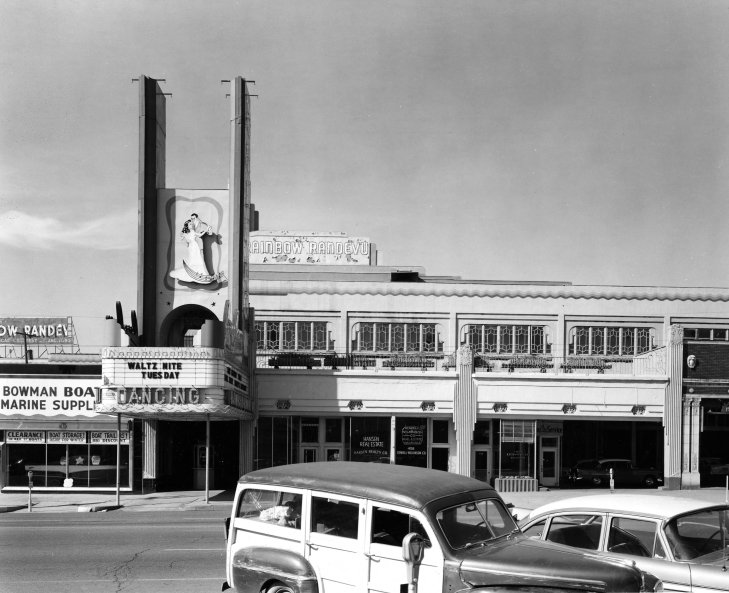 Built in 1922, the Covey-Ballard Motor Company stood between 400 and 500 South on Main Street in downtown Salt Lake City until 1931, when it was transformed into the Coconut Grove. According to Lagoon history, the ballroom was advertised as the largest in the United States. Sometime during the 1940s, the Coconut Grove was changed to the Rainbow Ballroom. Jerry Jones assumed ownership in 1946 and renamed it Rainbow Randevu. Its popularity continued as the community continued to fill the hall. In 1958 Lagoon bought and named it Danceland. A few years later, the company settled on its final name, The Terrace. Lagoon History shares that a final New Year’s Eve party was thrown in 1981 before The Terrace permanently closed. In August 1987 a fire demolished the building and “they paved paradise and put up a parking lot.” (Braden)
 In May 1948, The Salt Lake Telegram reported the fire that turned Rainbow Randevu “to a mass of twisted steel and charred wood” in the middle of the night. (Raff) Firemen searched, but only found a cigarette as the reason only four walls of the Rainbow were left standing. Covered by insurance, a seemingly positive Jerry Jones wanted to rebuild “as soon as possible.” The Rainbow would reopen to renewed popularity.
 Already partially torn down, The Terrace couldn’t disappear without a bang. In August 1987, The Deseret News wrote how it took 30 minutes for a fire to demolish a building that was so beloved by a community forever.
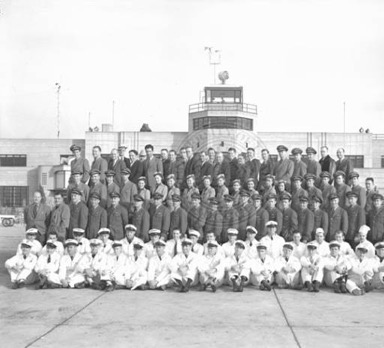

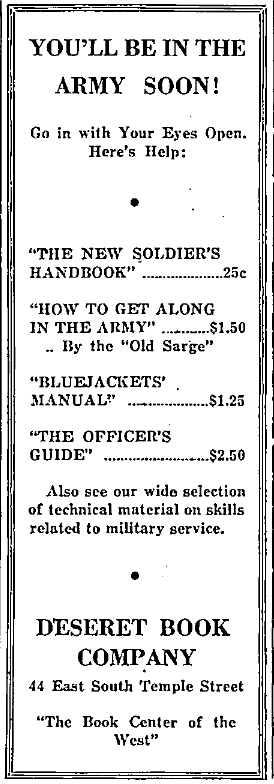 Deseret Book was started in Salt Lake City and has become a local staple for Utahns. It has kept up with current trends in order to provide its customers with relevant products and books. The Utah Chronicle published an ad for the Deseret Book Company on March 10, 1943, that advertised books to help prepare soldiers for their service in World War II. On March 24, 1943, the Utah Chronicle featured another ad for Deseret Book Company that was advertising “The new soldier’s handbook” and “How to get along in the army.”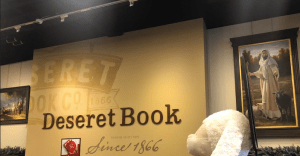
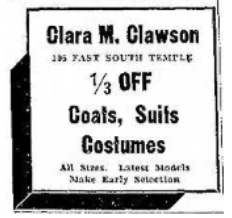 The Clara M. Clawson Shop was a clothing store for women located at 57 S. Main Street in Salt Lake City. Mrs. Clawson’s advertisements are found all throughout magazines and newspapers during the late 1930s, the 1940s and into the 1950s. The store was the passion project of Clara and was managed by her husband Seldon Clawson after it began to be recognized as a high-end clothing shop in Salt Lake City.
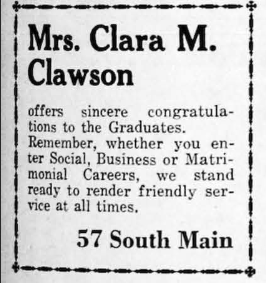 In a congratulatory ad published in the May 28, 1942, issue of the Utah Chronicle, the text states that “Mrs. Clara M. Clawson offers sincere congratulations to the graduates.” The couple tried to demonstrate they were there to help the graduates who needed them rather than trying to sell them anything. The ad gains more strength because everything around it is listing products that should be purchased, such as suit coats and new materials for schoolwork. This friendly congratulatory message is different from the surrounding ads and draws the reader of the newspaper into wondering who these people are and why their ads look so different.
 The Clawsons clearly made a consistent effort to make themselves known in the community as a friendly place. Published advertisements show that the couple was dedicated to the store that featured high-end clothing with a friendly, welcoming feel. Many of the ads are tailored to reach out to specific people during certain times. For example, an advertisement published in The Salt Lake Tribune around Mother’s Day in 1950 states that patrons should bring their mother into the store to pick out what she wants for her holiday gift. This is another subtle ad that invites a specific group into the store to meet those friendly individuals who are trying to curry favor with the community.
 The Clawsons took out a number of advertisements around the 1930s to 1950s, each working to build their image as a “Mom and Pop” store dedicated to their community and creating a friendly presence. Many of the advertisements were written in a way to make their readers feel like they were welcome there, which could be a reason why the Clara Clawson Shop was open for more than 65 years even during times of war and economic downturn.


 Utah Communication History Encyclopedia