
On November 25, 1909, the Salt Lake Tribune reported “New Men Taken Into ‘Skull and Bones.’” The article introduced the Skull and Bones Club to Utah. According to the Tribune, the ceremony involved a series of “foolish and embarrassing stunts” for the young men to endure as an initiation. Earlier that year, a Yale alumnus founded a chapter at the University of Utah. The Skull and Bones Club is an organization that was established in 1832 at Yale University and holds the purpose to create an elite secret society within the university.
 In contrast to the secrecy that the club holds today, on March 28, 1940, The Utah Chronicle’s front page read, “Skull and Bones Honors 11 Prominent Juniors.” In this article two University of Utah students, Joe Dyer and Glen Craig, were selected for Owl and Key membership. The Utonian, the University of Utah’s yearbook, even has a page dedicated to the Skull and Bones Bonesmen with a list of names and their yearbook photos for the 1934 Junior Bonesmen.
Keeping the names and members secret isn’t the only change the Skull and Bones Club has made over time. Until the 1990s, the club was exclusive only to men. The Deseret News also had some coverage on the transition to the Skull and Bones’s acceptance of female members. The Deseret News reported in October 1991, “A Bonesman, speaking on the condition of anonymity, said about 55 percent of the society’s members voted Thursday night in favor of admitting women. The move clears the way for the initiation of six women students into the organization that counts among its members some of the nation’s most powerful men, including President [George] Bush.”

Photo by Chris Ayers. Used with permission from the Daily Utah Chronicle.
Today, the University of Utah’s chapter has the mission to “to bring attention to issues from everywhere around the U.” Members “define issues as ‘anything that generally affects a student’s life,’ and their connections within many of the U’s student government groups keep them informed as to the current goings-on around the school,” according to The Daily Utah Chronicle’s most recent coverage of the Skull and Bones Club.
On the matter of what the Skull and Bones Club’s motives are currently, the Chronicle reports: “Our main goal this year is to make our organization known to students at the U,” in part to “dispel the doubts of students who are ‘tapped,’ or invited to join the organization, every spring.” The group remains largely anonymous so it does seem tricky to find out more details on what it is actively doing. However, the fluctuation in editorial coverage and secrecy of the group seems to be apparent as the 49th volume of the Utah Chronicle stated the names and positions of Bonesmen (Skull and Bones members).
Among all the change and what seems like progress the club has made, there are a few traditions that remain. In “Yale, Skull and Bones, and the Beginnings of Johns Hopkins,” William H. Jarrett II writes, “Each society owns an impressive mausoleum-like ‘tomb’ in which meetings are held each Thursday and Sunday evening. These are massive, very impressive structures, foreboding and bearing an unmistakable message: ‘Private; keep out.’” Ominous and curiosity striking, the Skull and Bones club will always be a beacon of mystery.
Bianca Velasquez graduates in spring 2019 with a bachelor’s degree in journalism and is currently preparing for a career in lifestyle and event coverage. Velasquez holds the position as SLUG Magazine’s editorial assistant and works with various other event organizations such as Craft Lake City and Brewstillery.
Sources
“Skull and Bones,” Wikipedia.
Koldewyn, Casey. “Getting to Know Secret Student Society Skull and Bones,” Daily Utah Chronicle, December 7, 2015.
“Skull and Bones,” 1935 Utonian, J. Willard Marriott Digital Library, The University of Utah.
“Skull, Bones Members to Let 6 Women in on Their Secrets,” Deseret News, October 25, 1991.
“New Men Taken into ‘Skull and Bones,’” Salt Lake Tribune, November 25, 1909, 2.
Jarrett II, William H. “Yale, Skull and Bones, and the Beginnings of Johns Hopkins,” Baylor University Medical Center Proceedings, 24, no. 1 (2011): 27-34.
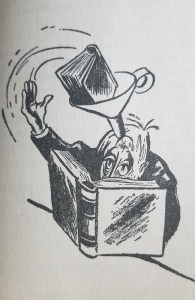
 This king of hazing was depicted in the insightful illustration by Roger Hammond that was published on September 26, 1940, in The Utah Chronicle. It provided the opportunity for those looking back at the university’ss history in order to gain a better understanding of something that would now be considered hazing and perhaps unethical. Yet, this hazing was once a staple tradition in many American colleges. Hammond’s illustration consists of a young man, wearing a dink, looking down as he is being heckled by his sponsor upperclassmen. Often times sponsors were older students who were there to orient the incoming students. Some of the phrases that appear to fly out of the sponsor’s mouth include: rules and typical things one even nowadays tells a freshman, such pointing out the locations of buildings on campus. A statement that stands out as oppressive is “Wear your green cap all year!”
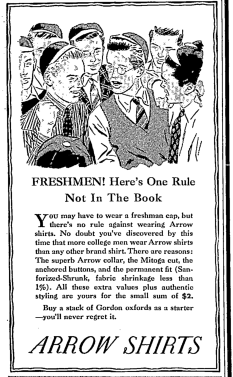 Messages like these were seen all across the nation; these hazing acts were nothing out of the ordinary. The rules became something that freshmen had to know by heart if they wanted to avoid the repercussions. They became like a rule book to follow. Knowledge of these rules was so common that companies used them to their advantage, as seen by this advertisement for Arrow shirts that was published in the Chronicle on September 26, 1940.


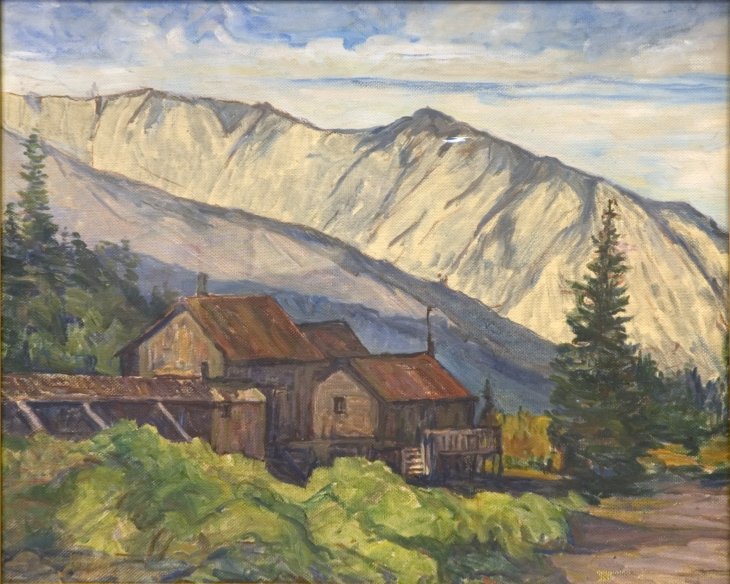
 Edwin Evans was an influential artist from Utah, a professor at the University of Utah, and the holder of various positions of prestige including president of both the Utah Art Institute and the Society of Utah Artists.







 Utah Communication History Encyclopedia